
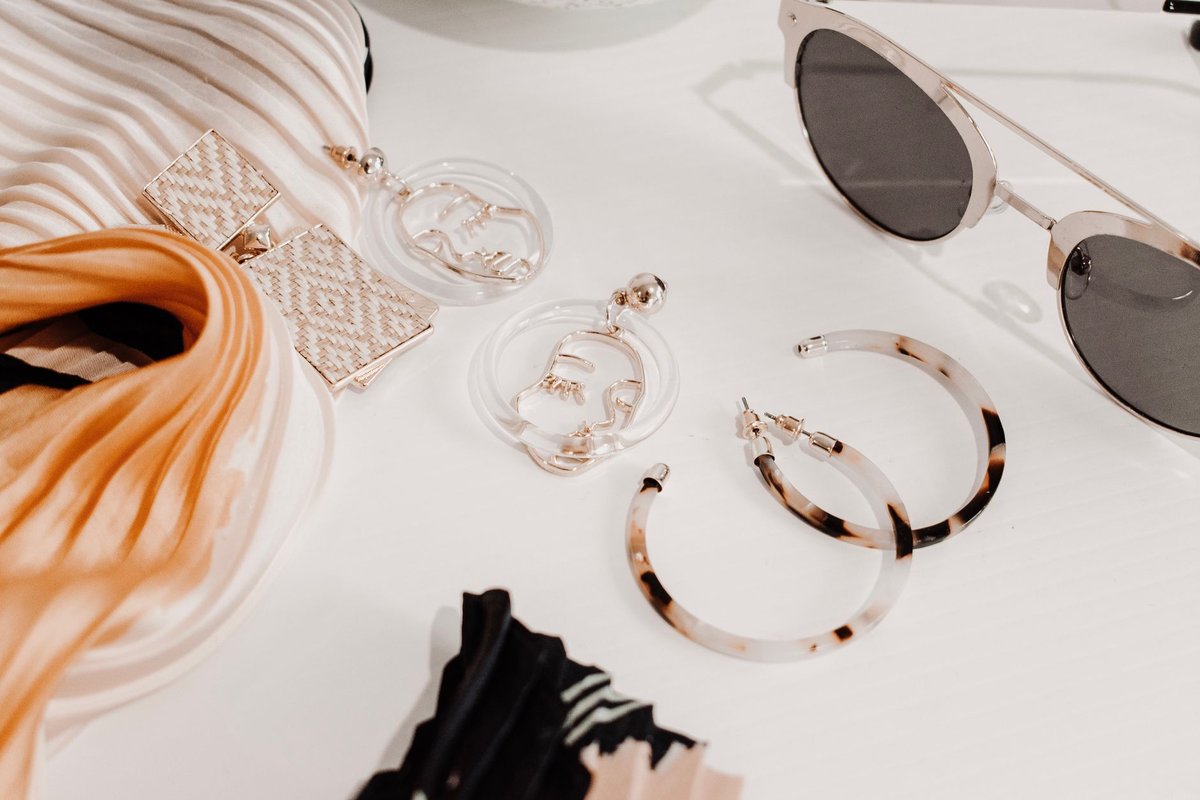
Simple Ways To Save On Accessories
7 October 2026Fashion
Accessories are where careful budgets slip. A rug doubles once you pick the usable size, sunglasses cost more after a lens upgrade, and a gift set looks tidy until you realise you’d never have chosen half of it on its own. If you want to spend less, decide what the accessory needs to do before you look at the promotional price. That helps you avoid the three usual leaks: upgrades, returns and bundled extras.
Write a one-line brief before you browse
Start with a sentence, not a product grid. “Runner rug for a narrow hall.” “Everyday black sunglasses.” “Bracelet gift in silver tone.” “Car mat for my exact model.” That brief gives you something to compare against when materials, finishes and add-ons start nudging the total upwards.
It also helps to split the job properly. Browsing fashion accessories asks different questions from browsing home accessories. Fashion buys usually get more expensive through metal, lens or branding choices. Home buys tend to grow through size, shape or extras such as underlay. For vehicle items, car parts and accessories is its own category again, because fit matters more than appearance.
A useful check: if you can’t explain the premium version in one sentence, leave it out for now. You can always add it back later, but starting with a tighter brief stops a casual browse turning into a more expensive basket.
Ignore “from” prices until you’ve opened the exact variant
Accessories are full of headline prices that apply only to the smallest, simplest or least customised version. That’s why the real comparison starts on the product page, not in the listing grid.
At Atlas Accessories, similar handmade pieces can change in price depending on material, size, finish and whether you choose a personalised or made-to-order option. If you like a bracelet or necklace, open each variant before deciding it fits the budget. A different material or simpler finish may give you the same look without pushing the total up. At the time of writing, Atlas Accessories also has 10% off your next order, but it only saves money if you’ve already chosen the lower-cost version that still does the job.
The same logic applies at RugsDirect UK. Rugs often appear cheaper than they really are because several sizes sit under one listing. Pick the size you actually need first, then compare shapes, washable options and any extras such as underlay or made-to-measure. A hallway runner and a standard rectangle can look close in a search result while landing very differently at checkout.
A practical trick is to compare the least glamorous details side by side: exact size, material, finish, fastening, lens type or level of customisation. Those fields usually decide the final spend. At the time of writing, RugsDirect UK has 10% off all orders with code SAVE10; check the basket total after applying it rather than assuming the headline saving tells the whole story.
Use fit and region checks to avoid paying twice
The cheapest accessory isn’t the one with the lowest sticker price. It’s the one you won’t have to replace, return or reorder.
For car accessories, AUTODOC gives you a concrete way to cut that risk. Use the registration-number search first, then narrow by make, model and engine before comparing products. After that, check the details that actually decide compatibility: fitting position, dimensions, axle location, engine capacity or brake-system specification where relevant. A cheaper part that doesn’t fit stops being cheap very quickly.
There’s a similar hidden cost with eyewear if you browse the wrong regional storefront. Hawkers has a country selector for UK shoppers, and it’s worth using before you compare anything. Prices, availability and checkout conditions can differ by region, so a product page viewed in one country setting may not match the basket in another. Set the site to the United Kingdom, keep that setting while you browse, and only compare products once you know you’re looking at the right storefront.
Neither of those tactics feels dramatic, but both can save more than chasing a weak discount on the wrong item.
Judge bundles against the cheapest basket you’d happily keep
Sets and bundles can work, but only when every piece would have made it into your basket anyway. If not, you’re just spending more neatly.
That’s the useful comparison to make at Daniel Wellington. The store separates watches, straps, jewellery, gift sets and jewellery sets clearly enough for a proper test: build the cheapest basket you’d still be pleased to give or wear, then compare that with the set. If a bundle only looks attractive because it adds a second strap or extra jewellery item you wouldn’t have chosen alone, it hasn’t really saved you money.
This is especially helpful for gifts. Decide your “good enough” version first, then let the bundle compete with that, not with a more expensive idea that appeared halfway through browsing. At the time of writing, Daniel Wellington offers 10% off your first order when you sign up for the newsletter. Use that after you’ve settled the singles-versus-set question, not as a reason to stretch the order.
The practical rule is simple: write the brief, choose the real variant, check fit and region, then apply any valid offer. If you want to shop with that sequence in mind, start from the category that matches the job: fashion accessories, home accessories or car parts and accessories.